
Vinegar vs baking soda for cleaning: which works better
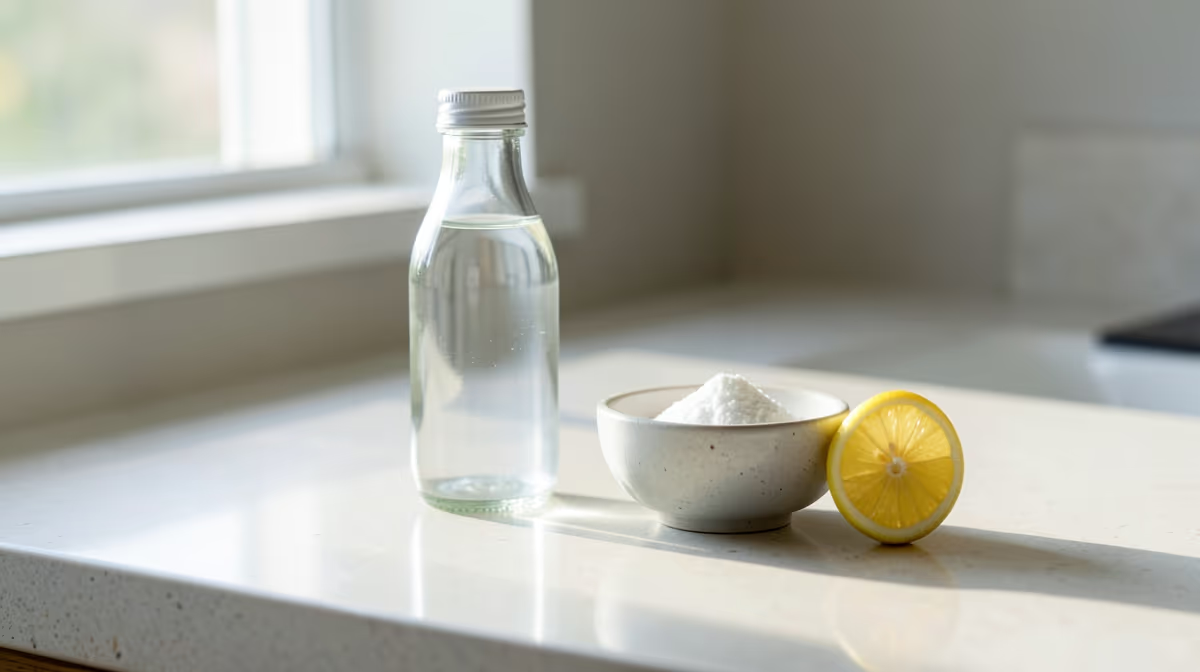
You do not need expensive commercial sprays when two simple pantry staples can handle almost any mess in your home. Deciding on vinegar vs baking soda for cleaning which works better depends entirely on the type of dirt you are trying to remove. Because these two household staples have completely opposite chemical properties, one excels at cutting through mineral deposits while the other is perfect for scrubbing away grease. Understanding their science helps you choose the right tool for every room.
Use white vinegar for dissolving mineral scale and hard water stains, and turn to baking soda for scouring greasy surfaces and absorbing stubborn odors.
The Science Behind How They Clean
To understand why these two items work so well, you have to look at the pH scale. White distilled vinegar is highly acidic, usually sitting at a pH of around 2 or 3. This high acidity makes it incredibly effective at dissolving alkaline substances, such as calcium, rust, and hard water deposits. It also breaks down the sticky buildup left behind by soaps and detergents.
On the complete opposite end of the spectrum, baking soda is a mild sodium bicarbonate powder with an alkaline pH of around 9. Alkaline substances are excellent at breaking down organic matter, including animal fats, oils, and grease. Because baking soda is also a fine, crystalline powder, it acts as a gentle abrasive. It provides just enough physical friction to scrub away stuck-on grime without scratching delicate surfaces like laminate or ceramic.
When to Use Vinegar for Best Results
Vinegar is your go-to solution for anything involving mineral buildup, glass streaks, or general freshening of non-porous surfaces. It dissolves stubborn scale by chemically breaking down the calcium carbonate bonds.
Dissolving Hard Water Deposits
- Soak a clean rag or paper towel in pure white vinegar.
- Wrap the wet rag tightly around the faucet or shower fixture.
- Secure it with a rubber band and let it sit for 30 to 60 minutes.
- Remove the rag and easily wipe away the softened minerals with a damp cloth.
Cleaning Windows and Glass
- Mix equal parts white vinegar and distilled water in a spray bottle.
- Spray the mixture directly onto your glass surface or mirror.
- Wipe the surface down using a clean microfiber cloth in a zigzag pattern to prevent streaks.
Softening and Deodorizing Laundry
- Pour half a cup of white vinegar directly into the fabric softener dispenser of your washing machine.
- Run your regular wash cycle with your normal laundry detergent.
- The vinegar will neutralize odors and strip away soapy buildup during the rinse cycle.
When to Use Baking Soda for Best Results
Baking soda shines when you need to lift grease, scrub away dried food, or neutralize unpleasant smells. Unlike vinegar, which has a sharp scent, baking soda physically binds with odor molecules to eliminate them.
Scrubbing Sinks and Tubs
- Sprinkle a generous layer of dry baking soda over the damp surface of your sink or bathtub.
- Wet a non-scratch sponge with warm water.
- Scrub in circular motions, focusing on areas with heavy buildup or stains.
- Rinse the surface thoroughly with warm water to prevent a powdery white residue from forming.
Cleaning Greasy Oven Interiors
- Mix baking soda with a small amount of water to form a thick paste.
- Spread the paste over the greasy parts of your oven, avoiding the heating elements.
- Let it sit overnight to break down the grease.
- Wipe away the paste with a damp cloth the next morning.
Deodorizing Carpets and Rugs
- Sprinkle dry baking soda liberally over the entire carpeted area.
- Let the powder sit undisturbed for at least 15 to 30 minutes, or overnight for deep odors.
- Vacuum the carpet thoroughly to remove all of the powder and the trapped smells.
The Truth About Mixing Vinegar and Baking Soda
Many popular cleaning guides recommend mixing these two ingredients to create a super-cleaner. While the foaming reaction looks like it is working miracles, the chemistry tells a different story.
Mixing vinegar and baking soda together creates a spectacular fizz, but the chemical reaction actually neutralizes both ingredients, leaving you with nothing more than salty water.
When you mix an acid with a base, they react to form water, carbon dioxide gas, and sodium acetate. The bubbling reaction can be useful for physically loosening clogs inside a drain because of the rapid gas expansion. However, if you mix them together in a spray bottle beforehand, you are simply spraying flat, salty water onto your surfaces, rendering both cleaning agents useless. For the best results, use them sequentially rather than mixing them into a single solution.
Surfaces You Should Never Clean With Either
While both products are natural and highly affordable, they are not universal cleaners. Using them on the wrong surfaces can cause permanent, expensive damage.
What to Avoid With Vinegar
- Natural Stone: Never use vinegar on granite, marble, or limestone countertops. The acid will etch the stone, leaving dull, permanent white spots.
- Hardwood Floors: Vinegar can strip away the protective polyurethane finish on your wood floors, leaving them dull and vulnerable to water damage.
- Cast Iron and Aluminum: Acid causes cast iron to rust and causes aluminum to pit and discolor.
What to Avoid With Baking Soda
- Glass and Mirrors: Baking soda can leave tiny, microscopic scratches on glass surfaces, making them look cloudy over time.
- Aluminum Cookware: Prolonged contact with baking soda can cause aluminum pans to oxidize and turn gray.
- Antique Silver: Baking soda can strip away the protective patina and damage delicate engravings on antique silverware.
Quick Reference Comparison Guide
To make your daily chores easier, use this quick guide to select the right natural cleaner for the task at hand.
| Cleaning Task | Best Choice | Why It Works |
|---|---|---|
| Hard water deposits on faucets | Vinegar | Acid dissolves calcium mineral bonds |
| Greasy stovetops and oven doors | Baking Soda | Alkaline powder breaks down grease |
| Cloudy shower glass doors | Vinegar | Cuts through mineral-rich soap scum |
| Smelly refrigerators and carpets | Baking Soda | Absorbs and neutralizes acidic odors |
| Sanitizing kitchen cutting boards | Vinegar | Acidic environment kills common bacteria |
| Removing stains from coffee mugs | Baking Soda | Mild abrasive action lifts stubborn stains |
Frequently Asked Questions
Can you mix vinegar and baking soda to clean drains?
Yes, this is one of the few times mixing them is useful. The physical bubbling action of the chemical reaction can help dislodge hair and soap scum inside a drain pipe before you flush it with boiling water.
Is vinegar or baking soda better for removing carpet stains?
It depends on the stain, but baking soda is generally safer for lifting fresh liquid spills and neutralizing odors. For set-in stains, baking soda can be applied first, followed by a light spray of vinegar to lift the stain to the surface where it can be blotted away.
Can vinegar damage your washing machine?
Yes, if used in excess or too frequently. The acetic acid in vinegar can slowly degrade the rubber seals and hoses inside washing machines, so it should be used sparingly and always diluted.
Why does baking soda deodorize better than vinegar?
Baking soda chemically neutralizes acidic odor molecules, like those from sour milk or sweat, rather than just masking them. Vinegar has its own strong scent that eventually dissipates, but it does not absorb odors from the air like baking soda does.
Conclusion
Vinegar and baking soda are both highly effective natural cleaners, but they work best when used for their specific chemical strengths. Use acidic vinegar to dissolve mineral buildup, clean glass, and break down soap scum. Turn to alkaline baking soda when you need a gentle abrasive to scrub away grease, lift dried food, and absorb stubborn household odors. Avoid mixing them together beforehand, as doing so neutralizes their cleaning power.


